Beanstack Tracker
- 4.7
- Rating
- 500.00K
- Installs
- Free
- Price

 Analysis by App-foxy
I spend a lot of time looking for reading tools that encourage consistency without turning books into another stressful task. Beanstack Tracker takes a practical route: it combines reading challenges with progress tracking, giving readers a simple place to record and build a reading habit. I found it most useful as a gentle accountability tool rather than as a full digital library or a replacement for an e-reader.
That distinction matters. The app is an Education app from Zoobean, Inc., and its central appeal is helping you stay engaged with reading you already do. It does not need to be the place where you obtain every book to be worthwhile. Instead, it works around your existing reading life, whether that means physical books, borrowed titles, or digital reading elsewhere.
How Beanstack Tracker fits into everyday reading
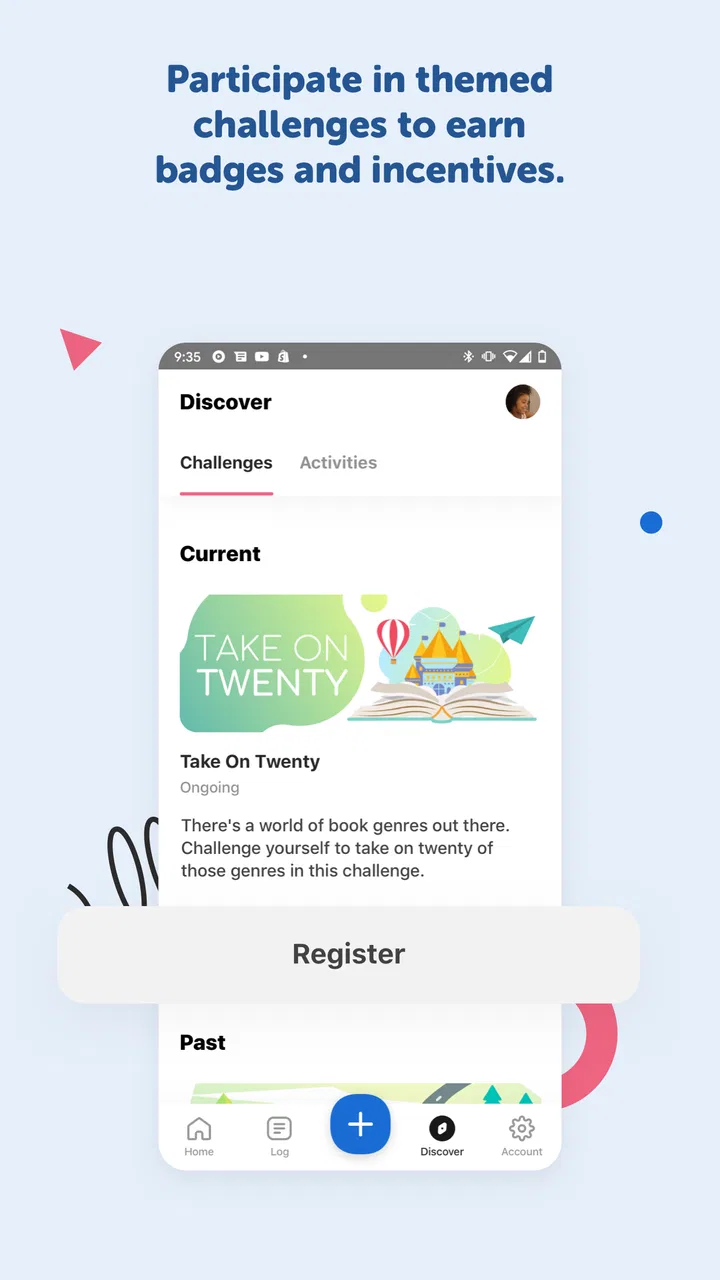
At its best, the app turns an intention such as “I should read more” into something visible and manageable. Challenges give that intention a structure, while tracking lets you see whether your routine is actually developing. I like this approach because it focuses on behavior rather than making reading feel like a competition against an impossible target.
You May Also Like

 Blood Strike: 2.5 Anniversary
Blood Strike’s Loadouts Turn Every Drop Into a Tactical Gamble
A close look at Blood Strike’s custom loadouts: how fast access to signature weapons reshapes its battle royale rhythm, rewards preparation, and narrows the gap between fights.

 Pandora - Music & Podcasts
Pandora’s Music Is Easy to Start, but Harder to Recover
Pandora’s strength is its low-effort path from a seed to a station. Its weak spot is how much confidence it asks you to place in connection, setup, and quiet recovery.

 8 Ball Pool
 Is Built on Rivalries, Rematches, and Routine
A close look at the rivalries, rematches, shared routines, and unanswered safety questions that turn a quick pool match into a persistent mobile community.

 Samsung Music
’s Quiet Strength Is Playing What You Already Own
Its reach comes less from spectacle than from dependable access to a personal library. That simplicity is both the app’s strongest retention engine and its ceiling.

 AccuWeather: Weather Radar
AccuWeather Review: A Quick, Clear Forecast for Everyday Decisions
For everyday plans, the best forecast is the one you can understand quickly. AccuWeather makes rain timing, radar, and local conditions easy to act on, with a few trade-offs.

 Hill Climb Racing
Why Hill Climb Racing Still Turns Crashes Into One More Run
A tiny car, a bumpy hill and one more upgrade: Hill Climb Racing keeps resurfacing because its simple chaos makes every near-miss feel personal.
More From Our News Desk



A realistic example would be a parent trying to make evening reading more regular. Rather than relying on memory, the family can use the app to keep reading activity connected to a challenge and check progress over time. The same basic workflow can help a student who keeps postponing assigned reading, or an adult who wants to replace scattered short-form browsing with a few pages before bed.
The important practical step is to choose a challenge that matches the reader’s real schedule. A target that looks motivating at first can become discouraging if it requires a level of consistency that does not fit school, work, travel, or family responsibilities. I would treat the challenge as a guide, not a judgment. The tracking is most useful when it helps you notice patterns and restart after a missed day.
What the free app offers in practical terms
Beanstack Tracker is free, so the basic decision is not whether the purchase price justifies the features. The value question is whether you will actually use a reading tracker often enough for its structure to matter. For someone who enjoys seeing progress and responds well to goals, free access makes experimenting easy. You can try the habit without committing money to another subscription or paid productivity system.
That also sets a clear boundary around the recommendation. I would not install it expecting a paid reading service, a bookstore, or a complete note-taking environment. Its value comes from organizing motivation around reading. If your main need is buying books, storing a large personal library, or making detailed annotations, a dedicated reading platform will probably serve you better.
The app has an Everyone content rating, which makes it suitable for a broad audience in principle. In practice, the best experience depends less on age and more on whether the reader likes structured goals. Younger readers may enjoy the sense of progress, while adults who prefer private, unmeasured reading may find the tracking layer unnecessary.
Where the habit-building approach works well
One strength is that the app gives reading a visible shape without requiring you to redesign your entire routine. You can use it at the start of a reading period to set direction, during the week to maintain momentum, and afterward to see whether the habit is becoming more regular. This makes it more approachable than systems that demand extensive setup before they become useful.
I also see value in using it as a shared conversation starter. A family can discuss what each person is reading without reducing the conversation to test scores or formal assignments. A teacher or reading group could use a challenge as a common framework, while still allowing participants to choose different books and move at different speeds.
Another less obvious use is recovery after a reading slump. When I stop reading for a while, a large goal feels like another obligation. A tracker can make restarting feel concrete: pick a modest challenge, record the first session, and let the visible progress rebuild momentum. The trick is not to treat the app as proof of discipline. It is more helpful as a small external reminder that makes the next reading session easier to begin.
How it compares with familiar alternatives
Compared with a plain notes app, Beanstack Tracker is more focused. A notes app can record titles and thoughts, but it usually leaves you to invent the goals, progress system, and routine yourself. Beanstack’s reading-centered structure is better for someone who wants encouragement without designing a spreadsheet or maintaining a custom template.
Compared with a general habit tracker, it has a narrower purpose. A general habit app may be better if you want reading alongside exercise, hydration, language study, and other routines in one dashboard. Beanstack Tracker makes more sense when reading deserves its own space and you want the motivation to stay tied to books rather than to a generic daily checklist.
Compared with a full e-reading app, the roles are different. An e-reader is designed around obtaining or opening digital books and reading them on screen. Beanstack Tracker is better understood as a companion for the reading activity itself. That means it can fit a mixed collection of physical and digital reading, but it may feel limited if you want one app to handle the entire journey from discovery to notes and reading position.
Compared with a social book community, it appears more useful for personal or organized challenges than for extensive discussion. Readers who want reviews, recommendations, and lively conversations may prefer a community-first service. Readers who mainly need a nudge to keep going may appreciate the quieter, more focused approach here.
Small workflows that make it more useful
The first workflow I recommend is to log reading close to the moment it happens. Waiting until the end of a busy week makes the record less reliable and turns a simple habit into administrative work. A quick update after reading keeps the tracker connected to the actual routine and makes progress feel immediate.
The second is to use a challenge as a planning tool before a busy period. If you know school exams, travel, or a demanding work deadline is approaching, choose a realistic reading aim rather than an ambitious one. This prevents the common mistake of abandoning the app because the target was designed for an imaginary schedule.
The third is to separate motivation from comparison. If several people use reading challenges together, compare ideas and encouragement rather than treating progress as a ranking. This is especially important with children or mixed-age groups, where different reading speeds and available time can make a leaderboard misleading.
A fourth useful habit is to review the record periodically instead of checking it obsessively. Looking back after a week or two can reveal whether reading happens more easily in the morning, before bed, or during a commute. That insight is more valuable than simply watching a number change, because it helps you protect the time when reading naturally fits.
Friction and limitations to consider
The biggest limitation is that tracking only helps when the user remembers to maintain it. Any habit app depends on a small amount of repeated input, and readers who dislike logging may quickly stop opening it. The free price removes financial risk, but it does not remove the time and attention required to keep the system alive.
There is also a risk of turning reading into a completion exercise. Some people begin chasing targets instead of choosing books they genuinely want to read. If you notice yourself rushing, abandoning difficult books too quickly, or feeling guilty about missed progress, the challenge is working against you. In that situation, a simple bookmark and a private reading routine may be healthier.
The app may also be too specialized for users who want detailed literary records. Readers who carefully track quotations, themes, editions, page-level notes, or long-form reviews will likely need another tool alongside it. Beanstack Tracker can support the habit around those activities, but I would not rely on it as a complete personal book archive.
Another trade-off is focus. Keeping reading in its own app can make the experience clearer, but it also means your reading activity may remain separate from other personal goals. Someone who wants one unified productivity dashboard may prefer a broader habit system, even if that system is less tailored to books.
Who is likely to get the most value?
I would recommend it first to readers who already have books available but struggle with consistency. It is particularly suitable for families, students, reading groups, and adults who respond well to visible goals. Because it is free, it is also a sensible low-risk trial for anyone curious about whether external structure improves a reading routine.
It is a good fit for someone who wants encouragement without buying a new reading service. If your books come from a library, a school, a personal shelf, or another digital source, the app can still have a role because the motivation and tracking are separate from book access.
I would be more cautious about recommending it to a reader who already has a reliable system. If you consistently finish books, remember what you read, and feel no need for challenges, adding another tracker may create duplicate work. The same applies to readers who strongly dislike goals or who prefer reading to remain entirely unmeasured.
It is also not my first choice for someone seeking deep reading analysis. A dedicated notes system, e-reader, or book-community app may be better depending on whether the priority is annotation, digital reading, discovery, or discussion. Beanstack Tracker earns its place when the central problem is maintaining momentum, not managing every detail of a reading collection.
Performance expectations and practical setup
The app has been available since late April 2018 and has continued to a current version of 6.0.14. It requires Android 8.0 or newer, so compatibility is worth checking before planning to use it on an older device. That requirement is not demanding for many modern phones, but it can matter for a family using an older hand-me-down handset.
Its broad adoption also suggests that the concept is easy for many readers to understand: the app has passed over half a million installs, with a 4.7 average from around 18 thousand ratings and roughly 1.9 thousand written reviews. I would read those figures as evidence of a strong general reception, not as a guarantee that every reading style will suit it.
When setting it up, I would start with one clear purpose instead of trying to record an entire reading history immediately. Pick the person or group who will use it, choose a manageable challenge, and establish when progress will be updated. A small routine is more likely to survive than a detailed cataloging project created on the first day.
My value judgment before you decide
Because the app is free, I judge it by usefulness rather than by a paid feature checklist. It delivers real value when a reader needs structure, reminders, or a shared goal to turn good intentions into regular reading. The strongest benefit is behavioral: it makes progress visible and gives a routine something concrete to return to.
That value is conditional. If you want books, advanced notes, or a complete social reading network, free access here does not solve the main problem. You may end up pairing it with other apps, which is perfectly reasonable, but it means Beanstack Tracker should be evaluated as a focused companion rather than an all-in-one reading home.
For families and groups, I think the challenge format can be especially useful when it encourages conversation instead of pressure. For independent adults, the decision depends on personality. A reader who enjoys milestones may find the app quietly motivating; a reader who sees tracking as paperwork may abandon it quickly.
My practical advice is to test it with a deliberately modest goal. Use it through a normal week, including at least one busy day, and notice whether recording progress makes reading easier or merely adds another task. That experiment will tell you more than the rating alone, because the app’s success depends on how naturally it fits your existing routine.
Overall, I see Beanstack Tracker as a worthwhile free Education app for building reading consistency, especially when the missing ingredient is accountability rather than access to books. I would recommend trying it to a friend who keeps saying they want to read more but needs a visible plan to get started. I would skip it, or choose a different tool, if the real need is digital book management, detailed annotation, or a broad social community.
My verdict: try it if a focused reading challenge sounds encouraging, and keep it only if the tracking supports your enjoyment. The app is at its best when it stays in the background, helping you return to your book instead of becoming another obligation competing for your attention.
FAQs for Beanstack Tracker
01What is Beanstack Tracker and how does it work?
Beanstack Tracker is a reading and literacy app that helps users track their reading habits, set goals, and participate in reading challenges. It’s designed for individuals, families, and educators to easily log books, earn badges, and discover new reading materials. The app integrates with local libraries and schools, making it a comprehensive tool for enhancing reading activities.
02Is Beanstack Tracker free to use?
Beanstack Tracker offers both free and premium features. Users can download the app and access basic functionalities like book logging and challenge participation without cost. However, additional features such as personalized recommendations and advanced analytics might require a subscription or a library partnership to unlock full access.
03Can I use Beanstack Tracker offline?
Yes, Beanstack Tracker allows users to log reading sessions and manage their book lists offline. However, syncing with your library account, accessing new challenges, and receiving updates require an internet connection. Once reconnected, any offline activities will automatically sync with your account.
04How does Beanstack Tracker support group or family accounts?
Beanstack Tracker supports multiple profiles under a single account, making it ideal for families or groups. Parents can create accounts for their children, log their reading, and track progress individually. This feature helps families collaborate on reading goals and participate in group challenges together, fostering a shared reading culture.
05What devices are compatible with Beanstack Tracker?
Beanstack Tracker is compatible with both Android and iOS devices. It can be downloaded from the Google Play Store for Android users and the Apple App Store for iOS users. The app is optimized for use on smartphones and tablets, ensuring a seamless user experience across devices.
Pros
- User-friendly interface for easy navigation.
- Tracks multiple reading challenges simultaneously.
- Customizable reading goals and reminders.
- Supports barcode scanning for book entries.
- Offers detailed reading statistics and insights.
Cons
- Limited social sharing features.
- Occasional syncing issues with some devices.
- May require internet for full functionality.
- Some users find notifications intrusive.
- Initial setup can be time-consuming.

Beanstack Tracker
Gallery